
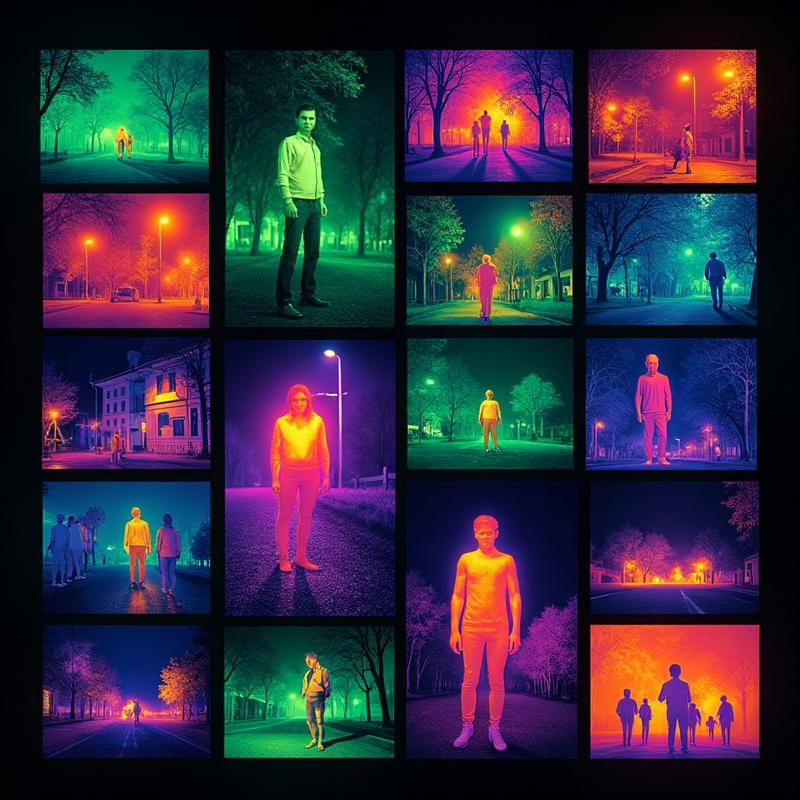
Three tools, three inputs
- A camera filter takes a visible-light photo and maps its brightness into orange, red, blue, or green.
- An infrared night vision device uses near-infrared light, often with infrared illumination, to capture a low-visible-light scene.
- A thermal imager senses long-wave infrared radiation emitted by objects, which can reveal temperature differences.
Their outputs are different
A filter outputs an artistic photo or video. Infrared night vision outputs an image under near-infrared illumination. A thermal imager outputs a heat map tied to radiance and temperature relationships. Similar colors do not mean the same data source.
When to choose each one
- Social visuals, night photography, pet observation, or stylized video: choose a creative camera filter.
- Low-visible-light observation of equipment, routes, or surroundings: consider a compliant infrared night vision device.
- Insulation checks, electronics, mechanical temperature differences, or thermal inspection: use an appropriate professional thermal imager and interpret it correctly.
Why the distinction matters
People often read “thermal camera” as a measurement tool. Being precise is honest and keeps search traffic useful: people looking for creative effects find the right product, while people needing calibrated measurement are not given a false promise.
Frequently asked questions
Can a thermal filter see through walls?
No. It processes only the visible-light image captured by the camera.
Does orange in a thermal-style photo represent temperature?
No. Orange is a palette mapping, not a calibrated temperature reading.