
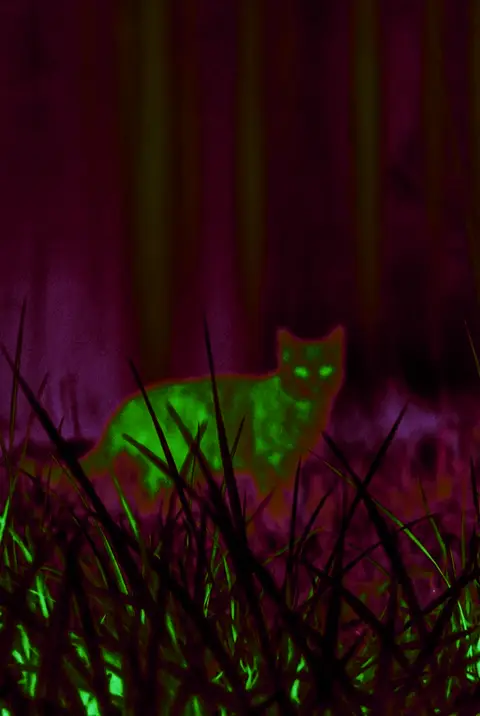
Start with a usable low-light photo
The scene needs a little light and a defined outline. A window, street lamp, corridor, or screen-lit face can work. A completely black frame has no detail; turning it green only creates green noise.
Four layers of the night vision look
- Black point: keep the background deep instead of lifting every shadow.
- Midtones: place the richest range of greens around the subject.
- Highlights: let eyes, lights, and reflections become brighter without large white patches.
- Grain: a little texture adds character, while too much destroys detail.
Balance the intensity slider
Begin around 50 to 70 percent and check whether faces and object edges remain distinct. When increasing contrast, watch the shadows so pets, roads, and people do not disappear just to make the image feel more tactical.
Scenes that suit green night vision
- Pet clips and search documentation after dark.
- Corridors, stairs, woods, and urban exploration themes.
- Science-fiction, surveillance, or retro video aesthetics.
- Side-by-side comparison with an Ironbow thermal version.
Frequently asked questions
Why is night vision usually green?
Green night vision is a familiar visual convention, and human vision is sensitive to changes in green luminance. Creative filters continue that language.
Can a green night filter work without any light?
A standard camera filter still needs visible detail in the source frame and cannot replace infrared illumination.